Céilí and Figure Dances
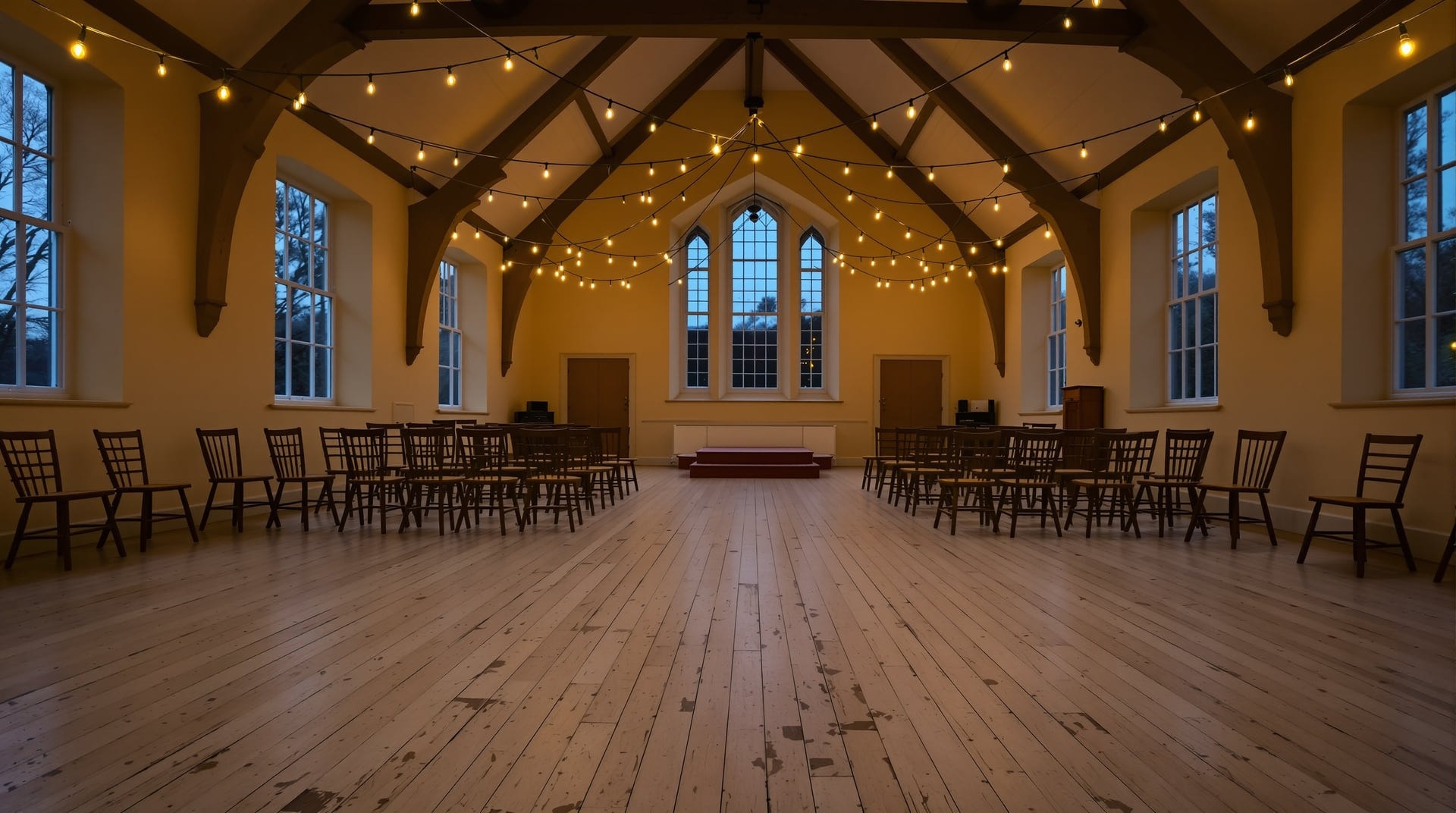
A céilí (pronounced KAY-lee) was originally simply a visit — an evening call to a neighbour's house, with talk, tea, music and, if there was room, dancing. The word now means the dancing itself, and the repertoire attached to it is the sociable half of a tradition better known for its solo dances.
What a figure dance is
A figure dance is a group dance built from a sequence of named movements, or figures, performed by a fixed number of dancers in a fixed formation. The formations run from two dancers up to sixteen: two-hand, three-hand, four-hand, six-hand, eight-hand and sixteen-hand dances all exist, and the numbers refer to dancers rather than to hands joined.
The internal structure is highly regular. Most figure dances alternate a repeated common movement — the body of the dance — with a series of different figures, so the whole is a rondo: figure, body, figure, body, and so on. That structure is what makes them learnable by a room of people in a single evening, and it is why a caller can walk a hall through a dance nobody present has done before.
The footwork is comparatively simple. Céilí dancing uses a small vocabulary of travelling and turning steps — a sevens and threes side step, a promenade step, a rising step — repeated across the whole repertoire. The difficulty is spatial rather than technical: knowing where you are supposed to be, and getting there in time.
The standardised repertoire
In the twentieth century An Coimisiún le Rincí Gaelacha collected and published a standard handbook of céilí dances, Ár Rincí Fóirne (roughly awr RINK-ee FOR-neh, "our team dances"), setting out thirty dances in prescribed form with their figures written down movement by movement. Familiar titles from that collection include the Walls of Limerick, the Siege of Ennis, the Haymakers' Jig, the Bridge of Athlone, the Four-Hand Reel, the Eight-Hand Reel, the High-Cauled Cap and the Humours of Bandon.
The handbook did what standardisation always does. It guaranteed that a dance called by one name in Cork and another county would be the same dance, which made competition possible and made the repertoire portable across the diaspora. It also froze a specific version of each dance at a specific moment, and in doing so quietly displaced the local variants it did not record.
Standardised, and everything else
The distinction that matters most in practice is between the handbook repertoire and what people actually danced. Alongside the thirty standard dances there is a much larger and looser body of social dancing — set dancing in square formations derived from nineteenth-century quadrilles, half-sets, and regional figure dances associated with particular counties — that was never standardised and continues in its own circuit of classes, weekends and pub back rooms.
Confusingly, that tradition also uses the word "set", meaning something entirely different from the solo traditional set dance. A set in the social sense is a suite of figures for four couples; a set dance in the solo sense is one dancer performing to one named irregular tune. Context is the only guide.
Where the older layer is documented
Because so much social dancing happened in kitchens and at crossroads rather than in institutions, the best record of it is folklore rather than choreography. The manuscript material held by the National Folklore Collection contains a great many first-hand accounts of house dances, the clearing of furniture, who played, what was danced and how the evening ran — descriptions of the social occasion in which the dances were embedded, which no dance notation preserves.
Read alongside the revival, that material makes an important point: the standardised repertoire was assembled from a living practice that was already changing, not from a fixed ancestral form. The handbook is a snapshot with authority attached.
Céilí dancing in competition
Figure dances are also competed, and team competitions are a substantial part of a large feis. Teams of four, six, eight or sixteen dancers perform a prescribed dance and are marked on precision, timing, formation and the accuracy of the figures. Because a team is only as good as its weakest placement, the training emphasis falls on uniformity — matched height in the air, matched arm carriage, matched arrival — which produces a very different aesthetic from the same dance done socially in a hall.
There is a real tension here that people inside the tradition talk about openly. A dance designed so that a room of strangers could join in has been refined into something a room of strangers could not possibly join in. Both versions are alive; they simply do not meet very often.
Why it is worth knowing about
For most of the tradition's history, group dancing was the tradition and solo step dance was the specialist branch practised by the few. The modern balance is the reverse. Anyone trying to understand what Irish dance meant to the communities that produced it — rather than what it means on a competition stage — has to start with the céilí, the music that carried it, and the ordinary evenings it belonged to.
Terms are collected in the glossary; sources are listed under further reading.