The Solo Dances
Every solo Irish dance is defined by three things at once: a musical metre, a pair of shoes, and a customary tempo. Change any one and it becomes a different dance. That is why the repertoire looks small on paper and feels large in a hall.
Soft shoe and hard shoe
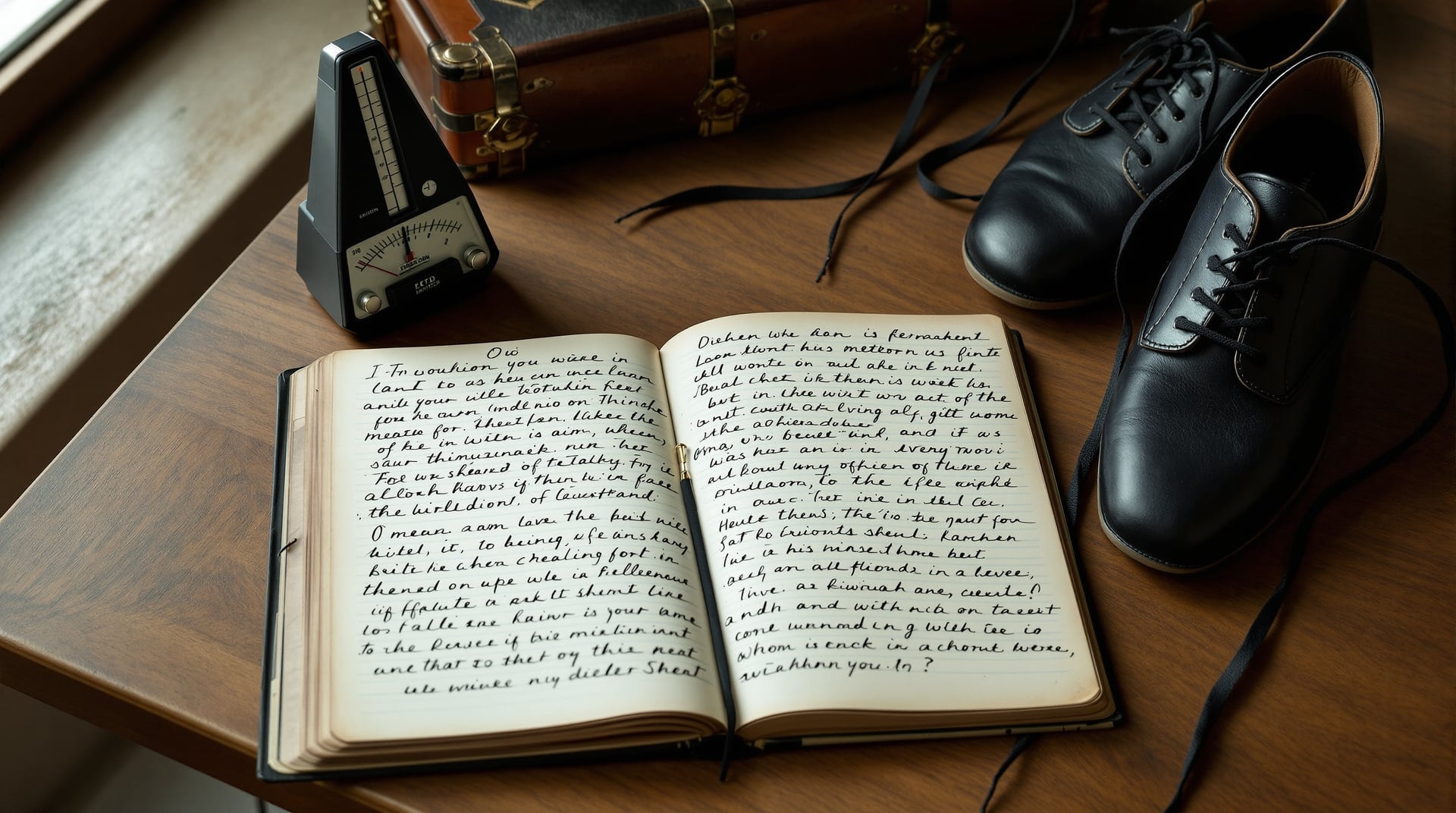
The first division is the footwear. Soft-shoe dances are danced in light laced leather shoes and are nearly silent: the interest is in elevation, extension, crossing and the shape of the leg in the air. Hard-shoe dances are danced in shoes with rigid tips and heels, and the interest moves into rhythm — the dancer becomes a percussion instrument playing against the tune.
A competitor at a feis will normally perform in both, which is why a bag of shoes is standard equipment and why the sound level in the room alternates so dramatically through the day.
The reel
The reel is in a brisk duple metre — counted in fours, with an even, driving flow and no strong lilt. In soft shoes it is the fastest and most airborne of the solo dances, full of high crossed leaps and rapid changes of foot, and it is usually the first dance a beginner learns to perform on a stage. There is also a hard-shoe treble reel, danced at a lower tempo, which is a favourite in showcase and team contexts because the rhythm reads so clearly to an audience.
The jigs
Jigs are in compound metre — the beat divides in three, giving the characteristic lilt that non-dancers hear as a gallop.
- Light jig — a soft-shoe dance in 6/8, quick and buoyant, with hopping and skipping figures. Typically an early dance in a beginner's repertoire.
- Single jig — also soft shoe and also in compound metre, but with a longer, more swinging rhythmic cell than the light jig, which gives it a rocking rather than a skipping character.
- Slip jig — in 9/8, the only common Irish dance metre with three groups of three to the bar. The extra beat produces a gliding, hovering quality quite unlike anything else in the repertoire, and the slip jig is generally regarded as the most graceful of the soft-shoe dances. In competitive practice it is danced by female competitors.
- Treble jig (also called the heavy or double jig) — the same 6/8 metre, but in hard shoes and at a markedly slower tempo, which opens space for dense rhythmic work. Slow-tempo treble jigs at championship level are among the most technically demanding things in the form.
The hornpipe
The hornpipe is a hard-shoe dance in a four-beat metre, but played with a pronounced swing — the beats are unequal, long-short, which gives it a swaggering, deliberate character quite distinct from the reel's evenness. It is danced at a moderate tempo, and because the swing leaves audible gaps between the strong beats, it is the dance where a dancer's rhythmic imagination is most exposed. Hornpipe and treble jig together make up the hard-shoe core of competition.
The traditional set dances
The traditional set dances are the oldest identifiable layer of the solo repertoire and behave differently from everything above. Each is tied not to a metre in general but to one specific named tune with an irregular structure, and each has a body of traditional steps attached to that tune. The dance and the tune are inseparable: you do not dance a set dance to something else.
Names in the traditional group include St Patrick's Day, The Blackbird, The Job of Journeywork, The Garden of Daisies, The King of the Fairies, Jockey to the Fair and The Blackthorn Stick. Most are in hornpipe or jig time, most have a first part and a longer, irregular second part usually called the set, and their tunes are documented in the printed collections and recordings held by the Irish Traditional Music Archive.
Above the traditional group sit non-traditional or modern set dances: newer compositions in the same shape, an irregular tune with a dance built to it, used at championship level where dancers want material that is not already familiar to every adjudicator in the room.
Tempo, and why it is regulated
Tempos are prescribed rather than left to taste, and they differ by grade: lower grades dance the hard-shoe dances faster, more advanced grades slower. That inversion surprises people, but it is sound. A fast treble jig can be got through with a compact, safe step; a slow one leaves long gaps that must be filled with something, and filling them well is a much harder problem. Slowing the music is how the form raises the difficulty without changing the dance.
Because the tempo is fixed by the competition rather than by the musician's preference, the tunes themselves are played in a particular way at a feis: steady, unornamented enough to stay clear, and repeated exactly as many times as the round requires. It is a very different job from playing the same tune in a session, where the living playing tradition pulls in the opposite direction — variation, ornament and drift.
What a dancer actually performs
A solo dance in competition is short. The dancer takes the stage, waits eight bars of introduction, and dances a fixed number of bars — commonly two steps, one leading with the right foot and one with the left — then bows and leaves. The whole thing may last forty seconds. Everything that has been said above is compressed into that window, which is why the form rewards precision so heavily and why which grade dances what, at which tempo, matters more than an outsider would ever guess.
Dance names and Irish terms used here are collected in the glossary, and the group repertoire is covered separately under team and figure dances.